Employee device monitoring is a legitimate business practice used by organizations worldwide to protect company data, ensure productivity, and maintain compliance. But it comes with legal and ethical boundaries that employers must respect. Getting it wrong can mean lawsuits, fines, and destroyed employee trust.
This guide covers the legal framework, practical implementation, and ethical considerations for monitoring employee phones and devices.
Key Takeaways
- Monitoring company-owned devices is generally legal with employee notice — but BYOD requires explicit consent.
- Always create a written monitoring policy and get signed acknowledgment from every employee.
- Collect only the data you need. Proportionality is a legal requirement in many jurisdictions.
- Transparency about monitoring is both legally safer and more effective than covert surveillance.
- Apply monitoring consistently across roles — selective monitoring creates discrimination risk.
When Is Employee Monitoring Legal?
The short answer: monitoring is generally legal on company-owned devices when employees have been informed. The details vary significantly by jurisdiction.
Company-Owned Devices
If your organization provides the phone, tablet, or laptop, you have broad rights to monitor how it is used. The device is company property, and courts in most jurisdictions recognize the employer's right to manage and monitor their own assets.
However, even on company devices, best practice requires that you:
- Inform employees that the device is monitored.
- Document the monitoring policy in writing.
- Have employees acknowledge the policy in writing.
- Limit monitoring to work-related activity where possible.
BYOD (Bring Your Own Device)
Monitoring personal devices is significantly more restricted. In most jurisdictions, you need explicit written consent from the employee. Even with consent, you should limit monitoring to work-related apps and data, not personal communications.
BYOD best practice
Many organizations handle BYOD by requiring employees to install a work profile or container app that separates work data from personal data. Monitoring is then limited to the work profile only.
Regional Legal Differences
- United States: Generally employer-friendly. The Electronic Communications Privacy Act (ECPA) allows monitoring on company devices with notice. State laws vary — Connecticut and Delaware require written notice before monitoring, while other states have fewer requirements.
- European Union: The GDPR imposes strict limits. Monitoring must be proportionate, have a legitimate purpose, and employees must be clearly informed. Blanket surveillance of all communications is generally not permitted.
- India: The Information Technology Act allows monitoring on company devices. Employers should provide clear notice in employment contracts and company policies.
- United Kingdom: Post-Brexit, the UK follows its own data protection framework (UK GDPR). The ICO recommends a formal impact assessment before implementing monitoring.
- Australia: Workplace surveillance laws vary by state. NSW and ACT require 14 days' advance notice before starting monitoring.
Always get legal advice
Regardless of jurisdiction, always consult with legal counsel before implementing a monitoring program. Laws change frequently, and the penalties for non-compliance can be severe.
Why Organizations Monitor Employee Devices
Understanding the legitimate reasons for monitoring helps frame the program correctly — both legally and in communication with employees.
Data Protection
Employees with access to customer data, trade secrets, financial records, or intellectual property represent a data security risk. Monitoring can detect unauthorized data transfers, use of unapproved cloud storage, or communication of sensitive information to external parties.
Regulatory Compliance
Industries like finance, healthcare, and government contracting have strict requirements about how data is handled and communicated. Monitoring helps ensure employees comply with regulations like HIPAA, SOX, PCI-DSS, and others. In some industries, monitoring is not optional — it is required.
Productivity Management
For remote and field-based employees, device monitoring provides visibility into how work time is spent. This is not about micromanaging every minute — it is about identifying patterns. If a field sales representative's location data shows they are not visiting clients, or if app usage shows excessive personal use during work hours, that is actionable information for management.
Asset Protection
Company-issued devices are valuable assets. Monitoring helps track device location in case of loss or theft, ensures devices are used according to policy, and helps IT teams manage software updates and security patches.
Best Practices for Implementation
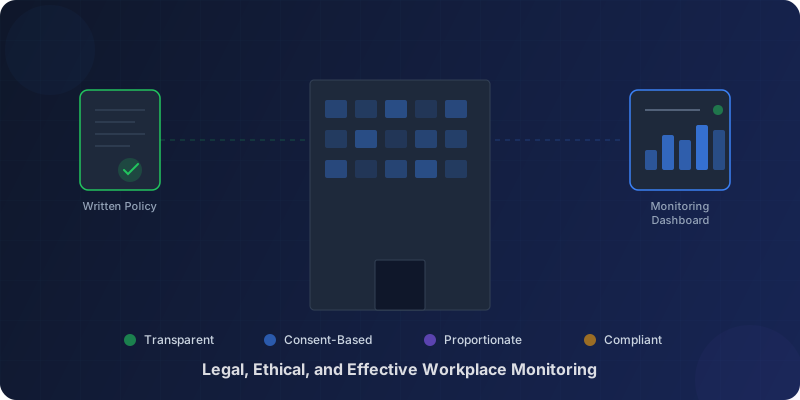
1. Create a Clear Written Policy
Your monitoring policy should be a standalone document (or a clearly defined section of your employee handbook) that covers:
- Which devices are monitored (company-owned, BYOD, or both).
- What data is collected (location, app usage, call logs, messages, browsing history).
- Why monitoring is conducted (security, compliance, productivity).
- Who has access to the monitoring data.
- How long data is retained.
- Employee rights regarding the monitored data.
2. Obtain Written Acknowledgment
Every employee whose device is monitored should sign an acknowledgment form. This protects the organization legally and ensures there are no misunderstandings. The form should clearly state that the employee understands monitoring is in place and consents to it as a condition of using the company device.
3. Limit Monitoring to What Is Necessary
Collect only the data you need for your stated purposes. If your concern is data security, you may not need to monitor call logs. If your concern is field employee location, you may not need browser history. Proportionality is a legal requirement in many jurisdictions and an ethical requirement everywhere.
4. Secure the Monitoring Data
Monitoring data is sensitive. It should be:
- Stored securely with encryption.
- Accessible only to authorized personnel (typically HR and direct management, not general IT staff).
- Subject to access logging — you should know who looked at what and when.
- Retained only as long as necessary, then securely deleted.
5. Be Transparent
Transparency works better than secrecy
Covert monitoring of employees is legally risky and ethically problematic. Employees who discover secret monitoring lose trust in the organization, regardless of the reason. Transparency about monitoring actually tends to achieve the desired behavioral outcomes on its own — when employees know devices are monitored, they naturally use them more appropriately.
6. Apply Monitoring Consistently
Monitoring should apply equally to all employees in a given role or category. Selectively monitoring specific individuals (without a documented, legitimate reason such as an active investigation) can create discrimination claims.
Using SpyTruth for Workplace Monitoring
SpyTruth provides the monitoring capabilities organizations need:
- GPS location tracking for field employees and company vehicles.
- App usage monitoring to understand how work devices are being used.
- Call and SMS logs for roles where communication monitoring is required.
- Browser history to ensure appropriate use of company internet access.
- Screen time data for productivity analysis.
- Geofencing to track when employees arrive at and leave work sites.
The dashboard provides a centralized view of all monitored devices, making it practical to manage monitoring for teams of any size. Data is accessible through a web browser from any location, so HR and management can review information without needing specialized software.
Common Mistakes to Avoid
These mistakes create legal liability
Monitoring without notice — Illegal in many jurisdictions and damages trust even where technically legal.
Over-collecting data — Monitoring personal messages on a BYOD device without consent is a liability.
No written policy — Verbal communication about monitoring is insufficient. You need documentation.
Inconsistent application — Monitoring some employees but not others in the same role creates legal exposure.
Punitive use without process — Firing based on monitoring data without giving the employee a chance to respond can lead to wrongful termination claims.
Ignoring local laws — What is legal in one jurisdiction may be a criminal offense in another.
The Bottom Line
Employee device monitoring is a powerful tool when implemented correctly. The key principles are straightforward: use company-owned devices where possible, inform employees clearly, get written consent, collect only what you need, secure the data, and apply policies consistently.
Done right, monitoring protects the organization, its employees, and its customers. Done wrong, it creates legal liability and cultural damage that far outweighs any benefit. Take the time to set it up properly from the start.